Committing Idolatry: Foo Fighters

16 Jun

I don’t think this has ever happened before. I don’t think I’ve ever fallen more in love with a band seven studio albums into their career. Isn’t the lust phase supposed to end after a few years? But it has happened – I am head over heels for the Foo Fighters as much now as the first time I laid ears on them. Alright, sorry – I know I can afford to tone down the cheese factor, but for real – their most recent, Wasting Light, is, without a doubt, the Foos’ finest.

I will admit, for a brief moment, I was skeptical and curious to see whether the drummer of Nirvana could pull of a lead singing gig in a brand new band.  I remember seeing one of their early videos on Mtv, back in the glory days when Mtv played videos, and thinking, “Hmm, how’s this gonna work out?” Quite well, it would seem.

The Foos still have it. So many bands mellow with age, but the Foos are still clearly evolving as a rock band. They’re rocking it harder than ever. I waited with bated breath for the CD to arrive in my hot little hands, as there are only about three artists left who I need to have their actual CD, to still enjoy that experience of looking through the liner notes and slipping an actual disc into my car stereo. Of course, in this day and age of maximum accessibility, I’d already heard the entire album front to back and back to front weeks before its actual release date, due in large part to James Molls’ documentary Back and Forth.
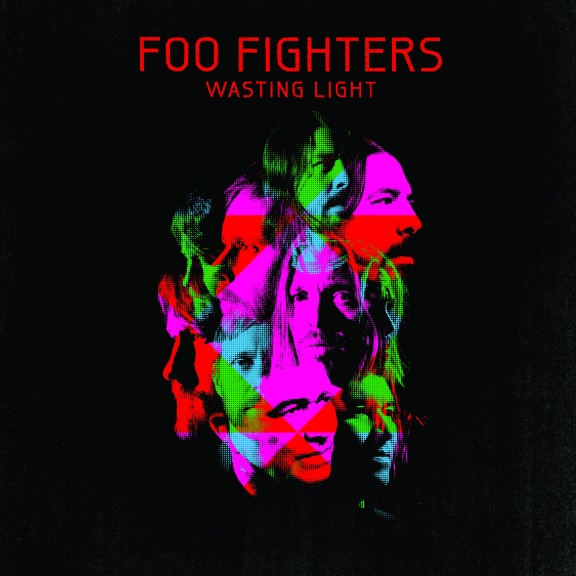
My fascination with rock stars is and always has been that they are ordinary people living their lives with an extraordinary backdrop. Back and Forth completely feeds into that. Grohl has been labeled “the nicest guy in rock,” and that comes through in Back and Forth, even among band re-orgs and Grohl re-recording all the drum tracks behind early drummer, William Goldsmith’s back. Seeing these five seemingly average guys (albeit wealthy and famous beyond belief) cutting an album in a garage (albeit a garage the size of a house) feeds right into my fascination.  

The doc not only chronicles the making of Wasting Light, but the timeline of the band, from Grohl’s time in Nirvana to the present day with the Foos. And for a band that doesn’t divulge or indulge in gossip and tabloid fodder, especially when the lead singer is constantly bombarded with, “Is that song about Kurt Cobain?” it definitely whets the appetite for any fan. And it whets the appetite for those Nirvana fans, too (of whom I am not especially), as Butch Vig produced the album and Krist Novoselic plays bass on the serioulsy kick-ass track, “I Should’ve Known,” which one cannot help but listen to and wonder, “Is that song about Kurt Cobain?” It’s a vicious cycle.

And, of course, there’s the direct hit of the arrow straight to my heart – the clincher, the thing I find most exciting about Wasting Lightit was recorded on analog. There is a moment in Back and Forth where the engineer marks and splices the tape…I am such a little analog geek that I get a little wanderlusty for the days when I wanted to make films…on film. Slightly different mediums, but the concept’s the same. The resulting sound is different, as well, and it’s noticeable on Wasting Light. Analog is richer, it’s fuller, it’s…Filet Mignon. Digital may be convenient and malleable and able to achieve near perfection, but I liken it to a much cheaper cut of meat, like…brisket. I don’t much care for brisket.  

What I do care for is the Foo Fighters, Wasting Light and Back and Forth. Check them out – check them all out.

Scott Weiland Scratches the Surface with Memoir

18 May

When I read Fall to Pieces by Mary Forsberg Weiland, Scott Weiland’s now ex-wife, I devoured it. It was such an insightful and awesome biography – I loved, loved, loved it. I think it goes without saying, therefore, that I was highly anticipating Scott Weiland’s memoir, Not Dead & Not for Sale, with sky high hopes.

Those high hopes were quickly dashed.

Dancing Around Insight

Not Dead and Not for Sale tiptoes around stories already easily found in the press about Weiland, his troubled relationship with his ex-wife, his troubled relationship with Stone Temple Pilots, his troubled relationship with Velvet Revolver…that list could go on and on. The book reads like a rapid fire rebuttal to all the headlines, mishaps and intimacies provided  by Forsberg Weiland in her book. Where are the gory details? The nitty gritty, down and dirty about all the band in-fighting, the make-ups and break-ups, the sex, drugs and rock & roll I’ve come to expect from a musician’s memoir? (It’s shocking I would expect that, I know) All still locked in the vault of the mind, apparently. The entire book reads like an overview. A very, very brief overview.

Weiland starts to go there but can’t quite commit, circling back to his love of drugs, drink and, of course, Mary. He provides about four “in-depth” anecdotes in a 288 page span, and they wade in quite a shallow pool. They don’t seem to contribute to the larger arc of what the public already knows to be the Scott Weiland story of love, drugs and second, third and fouth chances, either.

Perhaps the book should’ve been called Between the Lines, the first single off their latest album. Weiland vollies between adoration for his ex-wife and getting his digs in in the very next sentence. A product of a wound that is still fresh? One would almost hope. The hurt is there, the love is there, the struggle to call a truce between the two is there, but Not Dead leaves the reader wanting. It’s understandable desiring to keep some things sacred and private. Don’t write a memoir.

To boot, the book is loaded with fillers – two inch margins at the top of every page, pictures throughout instead of featured in the usual mid-section, and text in a 64 pt font appear on every other page. Song lyrics are peppered throughout, as well, but, again, every STP/Velvet Revovler fan knows the songs and, again, Weiland isn’t telling his readers anything we don’t already know.

“What’s real, and what’s for sale?”

Like the lyrics in the STP song, “Vasoline,” it’s hard to dissect the truth, especially if you’ve read both Fall to Pieces and Weiland’s memoir.

A big beat in the Mary-Scott decades long plotline is the day Forsberg Weiland torched $80,000 worth of Weiland’s wardrobe on their front lawn in Toluca Lake, California. Forsberg Weiland starts the story off by saying the family was moving from one home to the next, and she needed Weiland to take their two children to a hotel so she could concentrate and pack. She didn’t realize it at the time, but she was having a major psychotic break with her bipolar disorder.

Weiland has a wildly different take on how that story began. He writes that he was already moved out, the couple had already broken up and Forsberg Weiland wanted him back after hearing he was dating someone new. She kicked him in the face and later strangled his mother – some heady accusations and not hard to imagine why she would leave those out. So which is the truth? Fall to Pieces came first and was a better read. First impressions count the most. By the time you reach this point in Not Dead & Not for Sale it’s the final nail in the coffin.

Weiland’s memoir is an entertaining read for any Scott Weiland/STP fan, but if you’re looking to get behind the curtain and see the magical, all-powerful Oz, look elsewhere. I so wanted to love this book, but sadly, Not Dead & Not for Sale left this fan wanting more.

Chris Campanaro is No Starving Artist

11 Apr

Chris “Cecil” Campanaro is an artist, but as a bassist in three bands, including Terraplane Sun, and a successful film and TV composing career, he definitely does not file himself under the starving artist label. “I enjoy it,” he says of what he does and the amount that he does it. Campanaro says of the balancing act, “It’s been a challenge, but it’s been good.”

Starting out, playing shows was the only vision Campanaro had. He didn’t even realize or see that there was a whole other side of the business as far as composing and writing and the ability to make a living while still doing what he loved, “It was all about play, play, play when I thought about being a musician as a kid.” While he loves playing and performing, he says, at the same time, “I wanna be able to eat.”  So at around the age of 21 or 22, he began composing, and it was a career path he fell into.

While rooted in San Diego, California, he made a solo record of what he labels, “weird, abstract sounds – recording microwaves.” A friend of a friend got a hold of his record, he relocated to Venice, California, which he was looking to do anyway, and composing snowballed for him from there. He didn’t know much about that aspect of the industry, at the time, and was very fortunate when people took the time to teach him and expose him to that industry and give him lots of opportunities to grow and show off what he could do.

That included the album, American River, which he co-composed, arranged and produced and went on to gain a Grammy nomination in the New Age category, “Which is funny because if you know me you think, ‘what the hell is he doing in there?’” Campanaro laughs. He was 23 and thought, “What am I even doing here? It was a trip.” He didn’t win the award, but the old adage of it being an honor just to be nominated rings true for Campanaro, “We got robbed!” he jokes, “No, we definitely won. Shit, I won. That was one to show the parents, for sure.”

In addition to composing, Campanaro is always playing in one band…or two or three. He’s in several bands at the moment, including Taxi and playing with Matt Ellis from time to time, but Terraplane Sun is taking up most of his focus these days. The band has been out on the road recently, which included a month long residency at Las Vegas’ Cosmopolitan club. “It’s been really great. The Cosmo is a really cool spot.”

The club, which opened last November, is located near the Hard Rock Café. The Cosmopolitan, however, is less concerned with filling their venue to capacity just to fill it and more concerned with putting on shows that make people feel creative, to keep up with music in the current times. “It was a good scene, good exposure, good reaction,” Campanaro says.

Terraplane Sun formed a few years ago after Campanaro and singer Ben Rothbard kept crossing each other’s paths on the LA music scene. They played together a couple of times before realizing they should play together on a more consistent basis and formed a band. After a number of lineup changes, the Terraplane Sun that exists today and has been playing together for a little over a year, consists of Rothbard and Campanaro, guitarist Johnny Zambetti, Scotty Passaglia on drums and Gabe Feenberg on keys. Campanaro says, “There’s a good energy with these five guys.”

Influences as individual band members are all across the board. “The other guys are more old school, like deep, gritty blues and old folk, whereas I’m more into punk and Motown.” As a band, Campanaro thinks their sound probably comes more from the folk and blues place, but says Terraplane Sun is a crossbreed of everything into one.  

The bluesy influence is definitely easy to spot with a nice mix of rock and folk blended in. Their remake of Wanda Jackson’s “Funnel of Love” is great, and they fit in nicely with the current musical climate alongside bands like Cold War Kids, the Black Keys and Cage the Elephant. At the same time, though, they stand apart from all the others by doing things the way they want to when they want to do it.

Terraplane Sun has finished their second record, and now, the focus is on playing and even more recording to keep themselves out there for people to hear. The goal is just to keep on their own schedule and their own path, “We’re doing our own thing as a band, we’re on our own trip. None of us are overthinking it.”

Campanaro’s instrument of choice is the bass but plays everything else “poorly,” says he. “I can get what I need to hear out of what I play.” He used to play solo, but not so much anymore. His other band, Taxi, is a three piece featuring two bass players and a drummer, “All my thoughts are thrown out there with that band, and it’s so fun for me to do that. It gets to go in whatever direction it’s gonna go in. And I get to scream and sing, which is great.” For now, though, composing and Terraplance Sun are the priority, “It’s been a good trip so far.”

Campanaro says he never had his “a-ha” moment where he just knew he had to play music, either that or he says it hasn’t happened yet, nor does he know if it ever will. “I was terrified as a kid trying to be a musician. There’s definite unpredictability going down that road,” he says, “I wasn’t gonna back out, but it was tricky.” And when the writing opportunity opened his eyes to a whole different side of the music industry, the fortitude and luck of his career trajectory are far from lost on him, “I’ve just been grateful.”

Design a site like this with WordPress.com
Get started